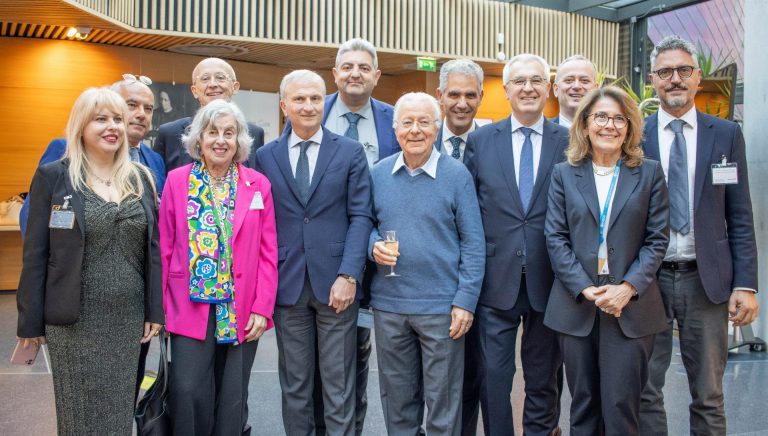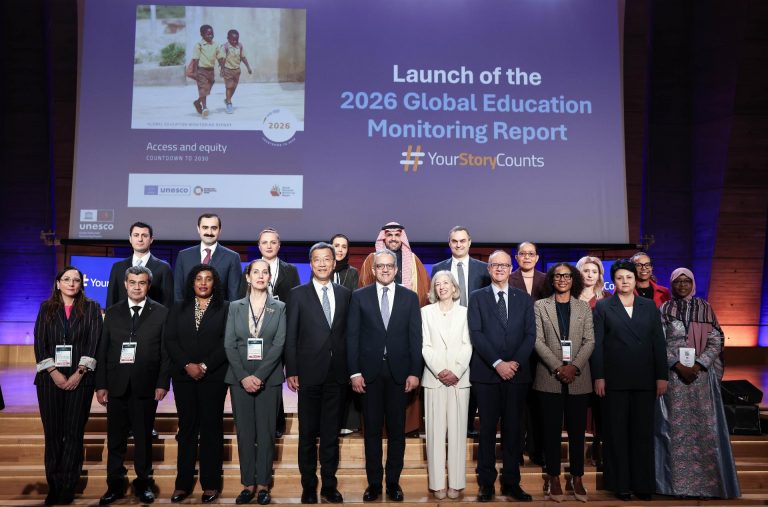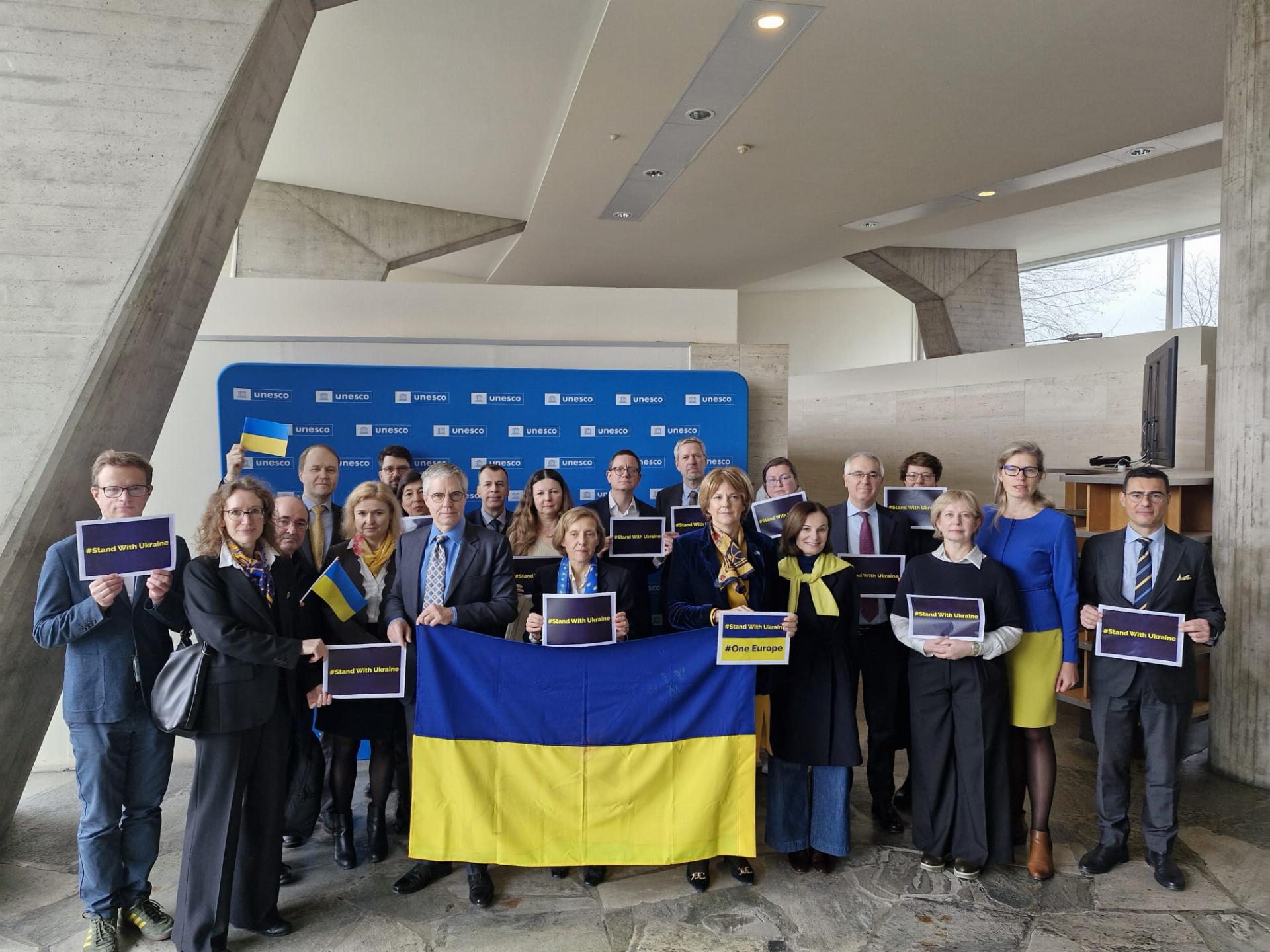
At the headquarters of UNESCO in Paris, the Ambassadors of the European Union reaffirmed their solidarity with Ukraine on the fourth anniversary of the beginning of Russia’s aggression. A moment both symbolic and political, it reflects the continuity of the European position in support of Ukraine’s sovereignty and territorial integrity.
The message carries particular resonance within UNESCO itself, whose mission is rooted in the preamble of its 1945 Constitution. It states: “Since wars begin in the minds of men, it is in the minds of men that the defences of peace must be constructed.” This foundational principle expresses the conviction that education, culture, science and information are central to preventing conflict and building lasting peace. In Ukraine, that principle has translated into concrete action since the early months of the war. As cities came under attack and millions were forced to flee their homes, UNESCO mobilized efforts to preserve, as far as possible, the country’s educational and cultural life. In the field of education, the organization has supported national authorities in ensuring continuity of learning, contributing to the safety of school facilities, providing technical assistance and facilitating solutions to maintain teaching activities, including in emergency conditions. At the same time, particular attention has been given to the protection of cultural heritage, which has also suffered significant damage. UNESCO has documented and verified the impact on museums, churches, theatres, libraries and historic monuments, while working alongside local professionals to safeguard collections and prepare emergency response measures.
The information sector has likewise been a priority. In a context marked by widespread disinformation and heightened risks for journalists, UNESCO has launched initiatives to strengthen the safety of media professionals and to promote media and information literacy among the public. It is within this broader framework that the political message reiterated in Paris takes shape: the pursuit of a peace that is durable, credible and consistent with international law. At UNESCO, this objective is closely linked to the founding belief that peace must first be built in people’s minds—through education, culture and access to free and reliable information.